
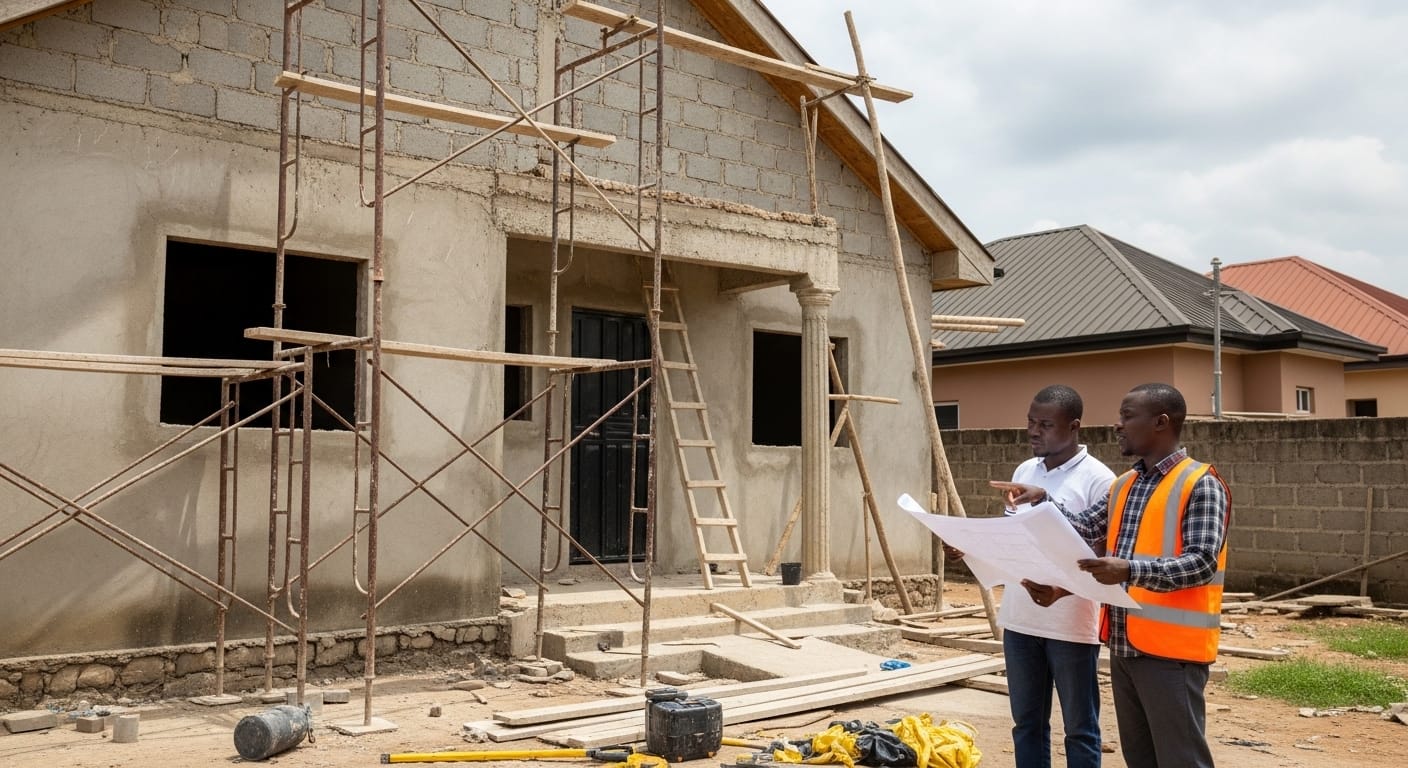
I’ve been on building sites across Accra, Kumasi, Takoradi, and a few dusty towns Google Maps doesn’t even recognize yet. I’ve seen beautiful homes turn into stress factories—and I’ve also seen smart renovations quietly add real value to families’ lives.
Most renovation problems in Ghana don’t start because people are careless. They start because homeowners don’t know what they don’t know. A mason says one thing. A friend says another. Social media shows something shiny. Before you know it, money is gone and headaches remain.
This article is not theory. It’s field experience.
If you’re planning to renovate or already halfway into one, these are the 10 renovation mistakes homeowners in Ghana make, and more importantly, how to avoid them.
1. Renovating Without a Clear Plan
What it is
Starting renovation work without a detailed plan for scope, budget, and timeline.
Why it matters
Renovation without a plan is like traveling from Accra to Tamale with no fuel gauge and no map. You may arrive—but not without stress.
Without a plan:
-
Costs spiral
-
Workers improvise
-
You keep changing your mind mid-project
Practical Ghana-based example
A homeowner in Kasoa wanted to “just remodel the kitchen.” Two weeks later, they were breaking walls, moving plumbing, and arguing over ceiling design—without adjusting the budget.
Common mistake to avoid
Starting demolition before decisions are made.
How to avoid it
-
Write down exactly what you’re renovating
-
Decide materials before work starts
-
Fix a realistic budget with 10–15% contingency
-
Agree on start and end dates (even if flexible)
2. Underestimating the Real Cost of Renovation
What it is
Assuming renovation costs will be cheap because “it’s not a new building.”
Why it matters
Renovation is often more expensive than new construction. You’re fixing mistakes, working around existing structures, and dealing with surprises.
Practical Ghana-based example
You budget GHS 30,000 to redo a bathroom. Once tiles are removed, you discover rotten pipes and weak blockwork. Suddenly, you’re at GHS 50,000.
Common mistake to avoid
Budgeting only for visible work.
How to avoid it
-
Always add contingency
-
Expect hidden issues (pipes, wiring, dampness)
-
Get itemized cost estimates, not lump sums
3. Hiring the Wrong Contractor (Or the Cheapest One)
What it is
Choosing a contractor based only on price or personal relationship.
Why it matters
The cheapest contractor is often expensive in the long run. Poor workmanship means repairs, rework, and stress.
Practical Ghana-based example
“Don’t worry, my uncle is a mason.” Six months later, tiles are popping, doors don’t align, and ceilings are cracking.
Common mistake to avoid
Assuming skill without proof.
How to avoid it
-
Ask for previous work photos
-
Visit one completed project
-
Agree on scope and payment stages
-
Avoid full upfront payment
4. Ignoring Structural Issues
What it is
Focusing on aesthetics while neglecting structural problems.
Why it matters
Paint and tiles won’t save a weak foundation or cracked lintel.
Practical Ghana-based example
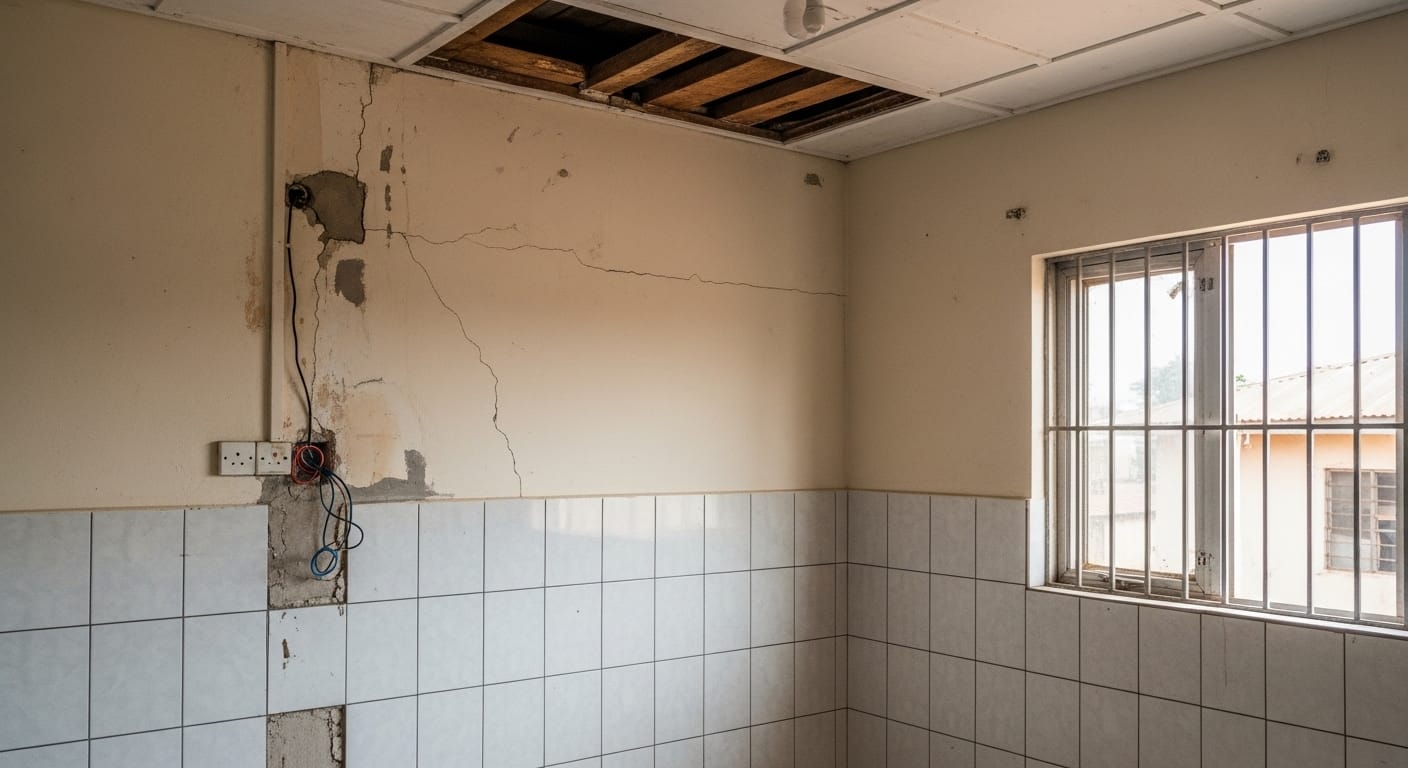
A homeowner repainted a cracked wall three times. The real problem? Foundation settlement during the rainy season.
Common mistake to avoid
Covering cracks instead of investigating them.
How to avoid it
-
Inspect cracks properly
-
Engage a structural professional if unsure
-
Fix the cause, not the symptom
5. Poor Material Choices for Ghana’s Climate
What it is
Using materials unsuitable for heat, humidity, and rainfall.
Why it matters
Ghana’s climate is unforgiving. Materials that look good online may fail locally.
Practical Ghana-based example
Imported MDF kitchen cabinets swell within one rainy season in coastal areas.
Common mistake to avoid
Choosing materials based on looks alone.
How to avoid it
-
Use moisture-resistant boards
-
Choose exterior paints meant for tropical weather
-
Ask how materials perform in heat and humidity
6. Bad Electrical and Plumbing Planning
What it is
Treating services as an afterthought.
Why it matters
Electrical and plumbing mistakes are dangerous and expensive to fix later.
Practical Ghana-based example
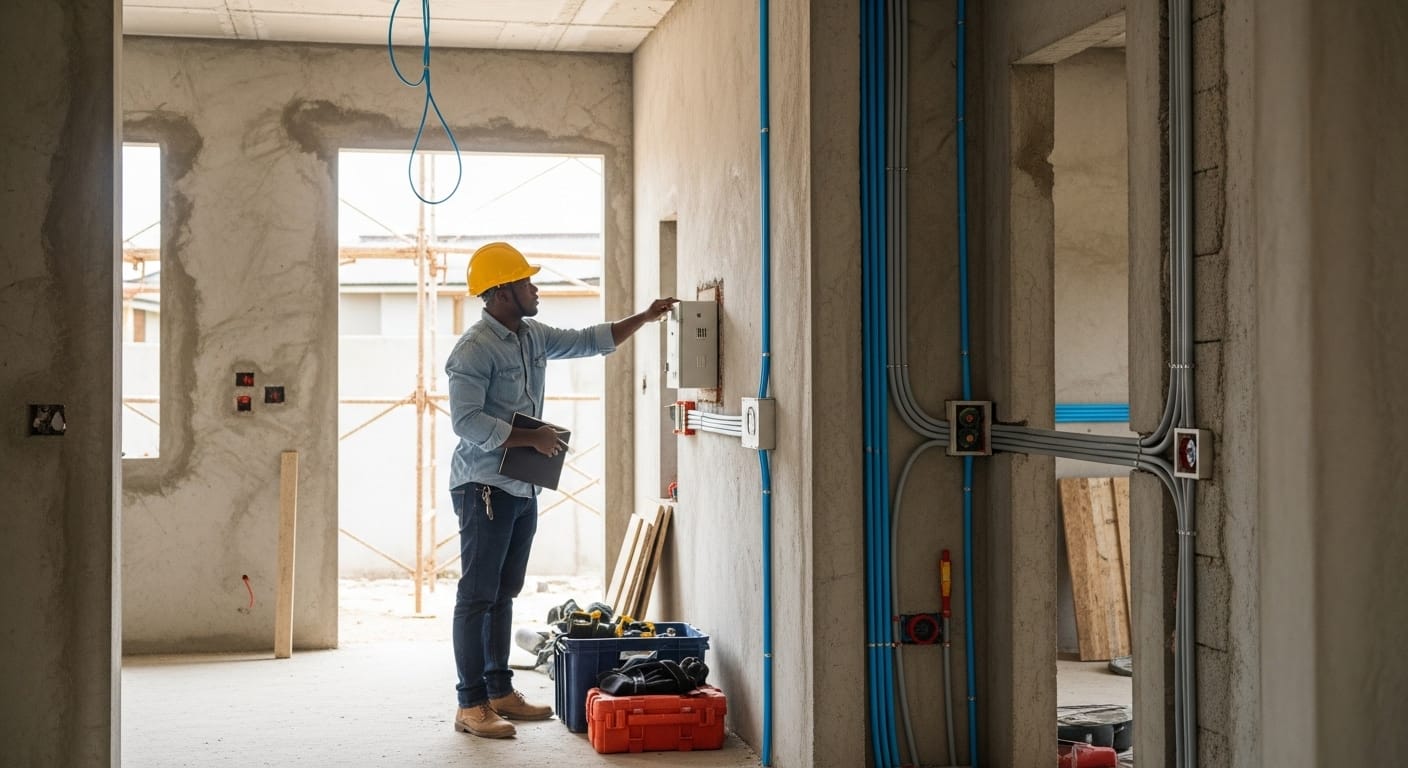
Sockets placed behind cupboards. Pipes buried without access points. Extension cords everywhere.
Common mistake to avoid
Letting workers “figure it out on site.”
How to avoid it
-
Plan socket and switch locations
-
Use proper gauge wires
-
Test plumbing before closing walls
7. Skipping Permits and Approvals
What it is
Renovating without checking local authority requirements.
Why it matters
You can be stopped mid-project—or forced to undo work.
Practical Ghana-based example
A homeowner added a balcony without approval and was ordered to demolish it.
Common mistake to avoid
Assuming renovations don’t need permits.
How to avoid it
-
Check with your local assembly
-
Ask professionals familiar with local rules
-
Keep basic documentation
8. Poor Supervision of Work
What it is
Leaving everything in the hands of workers without oversight.
Why it matters
Even good workers need supervision. Mistakes happen when no one is watching.
Practical Ghana-based example
Tiles laid without spacers. Ceilings installed off-level. “We’ll fix it later” never happens.
Common mistake to avoid
Visiting site only when problems arise.
How to avoid it
-
Inspect work daily or weekly
-
Take photos
-
Ask questions early
9. Changing Designs Midway Through Work
What it is
Making major design changes after work has started.
Why it matters
Changes cost money, waste materials, and confuse workers.
Practical Ghana-based example
Kitchen layout changed after plumbing installation. Everything had to be redone.
Common mistake to avoid
Deciding finishes during construction.
How to avoid it
-
Finalize designs early
-
Lock key decisions before demolition
-
Accept small imperfections instead of restarting work
10. Renovating for Trend Instead of Function
What it is
Copying Pinterest or Instagram designs without considering daily use.
Why it matters
Your house is not a showroom. It’s a living space.
Practical Ghana-based example
Glossy white floors that show every dust particle by noon.
Common mistake to avoid
Choosing beauty over usability.
How to avoid it
-
Think long-term maintenance
-
Choose finishes you can live with
-
Prioritize ventilation, storage, and durability
Final Thoughts From the Site
The biggest renovation mistake homeowners in Ghana make is rushing decisions. Good renovation takes patience, planning, and the right advice.
If this article saved you money—or stress—share it with someone planning a renovation. Too many people learn these lessons the hard way.
Frequently Asked Questions (FAQ)
1. How much does renovation cost in Ghana?
Renovation costs vary widely depending on scope, materials, and location. Always budget extra for hidden issues.
2. Is renovation cheaper than building new in Ghana?
Not always. Renovation can cost more due to repairs, demolition, and working around existing structures.
3. How long does a typical renovation take?
Small renovations may take weeks. Major ones can take months, especially if surprises arise.
4. Do I need permits for home renovation in Ghana?
Some renovations require approval, especially structural changes. Always check with your local assembly.
5. What materials last best in Ghana’s climate?
Concrete, treated wood, moisture-resistant boards, and quality exterior paints perform better long-term.
6. Should I live in the house during renovation?
For minor work, yes. For major renovations, it’s often safer and less stressful to relocate temporarily.
